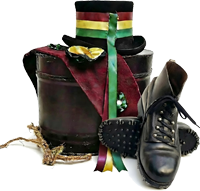
About The Seven Champions Molly Dancers
Boasting a cult status on the folk festival circuit the Seven Champions have come to define a certain style of Molly — energetic and precise with sharp movements and a willingness to embrace anything that might entertain an audience.
Our performances are characterised by the rhythm of our hobnailed boots, our custom of dancing to unaccompanied female singers or solo musicians, and our habit of appropriating tunes and songs from anywhere we please.
We will just as happily dance to a jazz number like Moondance as to traditional tunes like the Raggle Taggle Gypsy and Mad Moll of the Cheshire Hunts.
Whatever the performance, we always aim for variety, colour, fun and consistently high standards.
What is Molly Dancing?
As Molly dancers, we stand apart from many of our Morris cousins in that we use none of the sticks, hankies or bells associated with the Cotswold tradition. And unlike Border Morris sides, we don’t use drums: we prefer to rely on our stomping boots for percussion.
Molly dancing hails from the East Anglian Fens, where it was performed in winter by out-of-work ploughboys. Many Molly sides today take their inspiration from the history of the fens and washes or that region.
The Molly tradition is less well recorded than that of the Cotswolds. This has given us a golden opportunity to reinvent and reimagine, to create the best possible combination of tradition and street entertainment. The emphasis is on disguise and trickery, on joy and cheekiness, on menace and ordered chaos.
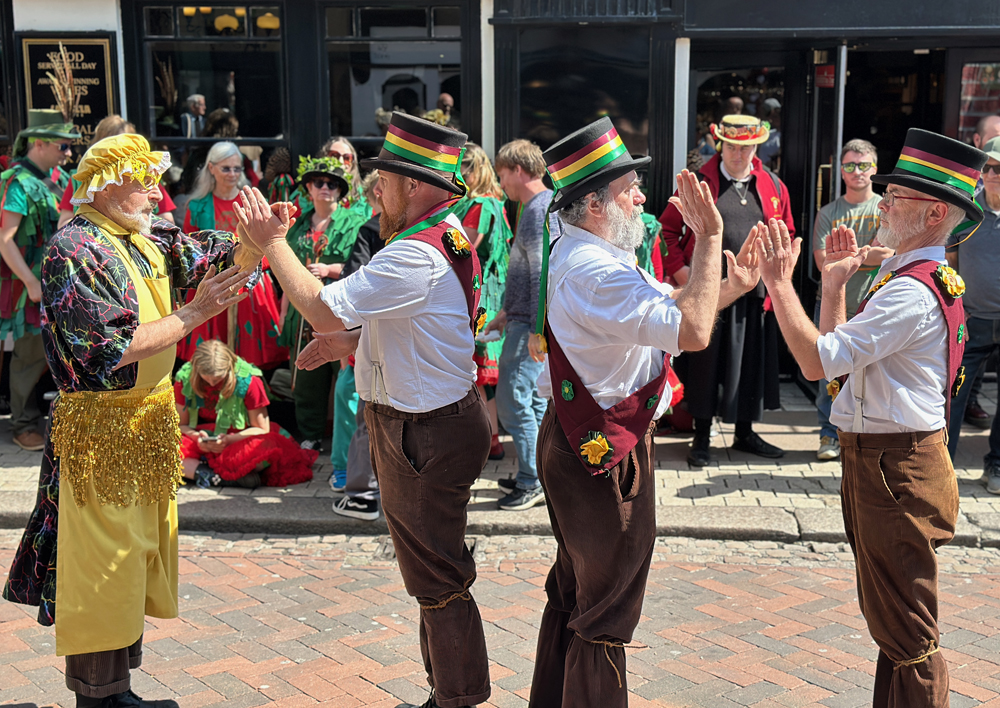
“Well, I think the Seven Champions Molly Dancers are fantastic. So different, what they do. When they started, it was so different, so powerful. They’ve still got the energy, and the precision, and that sort of madness. They’re absolutely superb.”
John Kirkpatrick